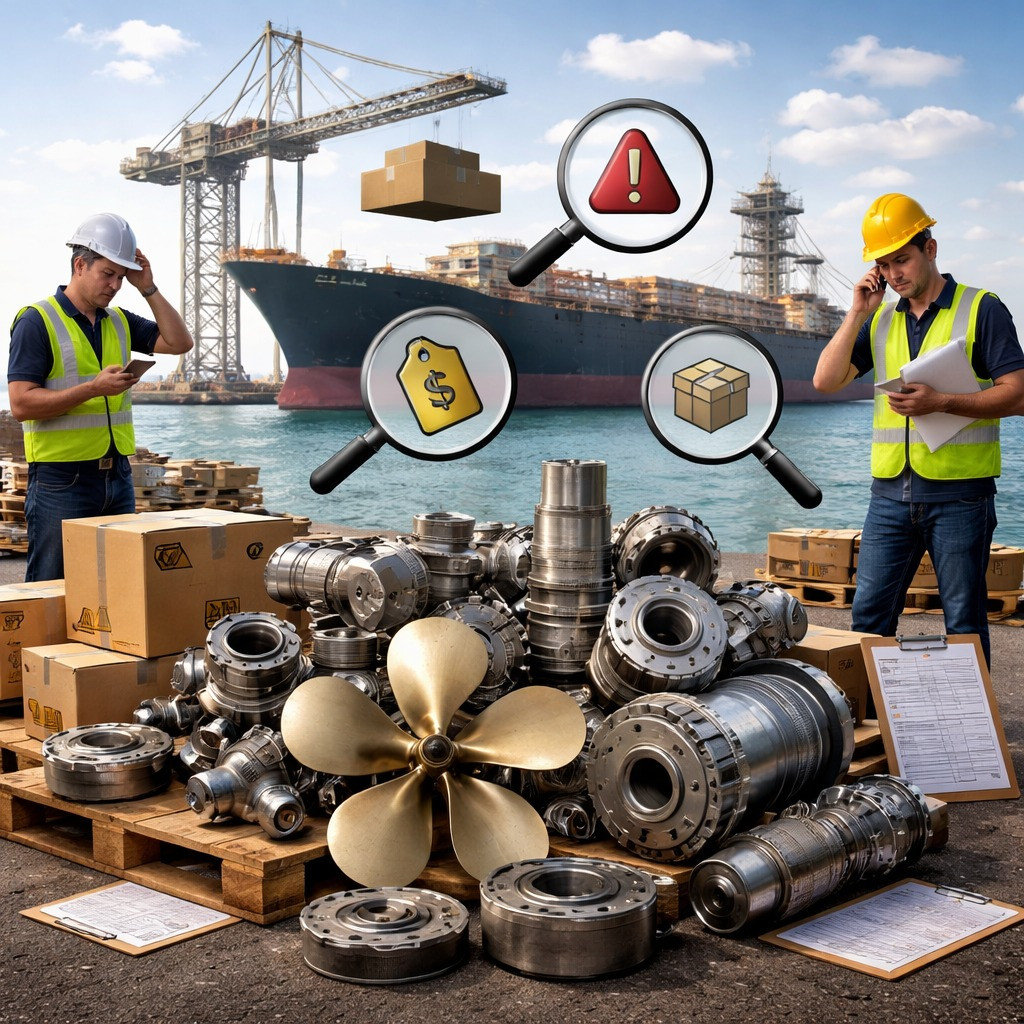
Biggest Challenges in Marine Spare Parts Procurement
Marine spare parts are very important for ship operations. Every machine on a ship depends on strong and working parts. If even one small part fails, the whole ship can stop. This can cause delay, safety risk, and financial loss.
Because of this, marine spare parts procurement is a very important process. But it is not easy. Companies face many problems like supply chain issues, procurement challenges, high costs, supplier reliability, inventory problems, genuine marine parts, and quality issues.
This blog explains these challenges in simple language and in detail.
What is Marine Spare Parts Procurement?
Marine spare parts procurement means buying and supplying parts needed for ship operation and maintenance. These parts include engine components, pumps, electrical systems, navigation equipment, and safety systems.
Ships operate in different countries and oceans. Because of this, procurement is not just about buying parts, but also about managing delivery, cost, quality, and time.
In many cases, procurement teams must coordinate with suppliers, port agents, and ship crew at the same time. This makes the process more complex compared to other industries.
Why Marine Spare Parts Procurement is Important
Good procurement helps ships run smoothly and safely. It ensures that all systems are working properly and reduces unexpected breakdowns.
When spare parts are available on time, maintenance work becomes easier and faster. This improves efficiency and reduces downtime.
Poor procurement, on the other hand, can lead to serious problems. A missing or wrong spare part can stop operations, delay shipments, and increase costs. It can also create safety risks for crew members.
Supply Chain Issues
Supply chain issues are one of the biggest problems in marine spare parts procurement. Spare parts often travel long distances and pass through many stages before reaching the ship.
Common Problems
Delay in delivery due to port congestion
Weather and sea conditions affecting shipping
Global disruptions like pandemics or trade restrictions
Limited transport options in remote areas
In many cases, ships are not near major ports, which makes delivery more difficult. Sometimes, parts arrive late, and the ship must wait or continue working with a faulty system.
This increases downtime, fuel consumption, and overall operational cost.
Procurement Challenges
Procurement challenges happen during the process of selecting and buying spare parts. Marine equipment is complex, and each part must match exact specifications.
It becomes even more difficult when dealing with older ships, where part numbers may not be available or documentation is outdated.
In emergency situations, procurement teams have very little time to find the right part. This creates pressure and increases the chances of errors. A wrong part can damage equipment and delay repairs.
Another challenge is dealing with multiple brands and models. Each requires different spare parts, making the process more complicated.
High Costs
High costs are a major concern for ship owners and operators. Marine spare parts are expensive because they are made to handle extreme conditions like high pressure, heat, and corrosion.
Why Costs Are High
Limited number of manufacturers
High shipping and logistics cost
Import duties and port charges
Emergency air freight expenses
In urgent situations, companies often use air transport, which is much more expensive than sea transport.
Over time, these costs add up and affect the overall budget. That is why companies try to find a balance between cost and quality, but this is not always easy.
Supplier Reliability
Supplier reliability is very important in marine spare parts procurement. A reliable supplier ensures that parts are delivered on time and meet quality standards.
Common Supplier Issues
Late delivery of parts
Inconsistent product quality
Lack of proper documentation
Poor communication and support
Unreliable suppliers can create serious problems. Delays in delivery can stop operations, while poor-quality parts can lead to equipment failure.
Building long-term relationships with trusted suppliers helps reduce these risks and ensures smooth procurement.
Inventory Problems
Managing spare parts inventory is a big challenge in the marine industry. Ships have limited storage space, so it is not possible to keep all parts onboard.
At the same time, not having critical parts can cause delays during maintenance.
Companies often struggle to maintain the right balance. Too much stock increases storage cost and waste, while too little stock creates risk during emergencies.
Poor planning and lack of tracking systems make this problem worse. Some companies also face issues with obsolete parts that are no longer used.
Genuine Marine Parts
Using genuine marine parts is very important for safety and performance. Genuine parts are designed to match the equipment perfectly and last longer.
However, the market has many fake and duplicate products. Some suppliers offer low-quality parts at lower prices, which can attract buyers.
Risks of Non-Genuine Parts
Faster wear and tear
Damage to machinery
Higher maintenance cost
Safety risks for crew
Using non-genuine parts may save money in the short term, but it leads to higher costs and risks in the long run.
Quality Issues
Quality issues are directly linked to the performance and reliability of marine equipment. Poor-quality parts can fail under pressure and create serious problems.
Common quality problems include low-grade materials, lack of proper testing, and poor refurbishment work.
When quality is not maintained, it leads to frequent breakdowns and increased maintenance. It also affects the safety of the ship and crew.
This is why quality checks and inspections are very important before using any spare part.
Logistics and Delivery Challenges
Delivering spare parts to ships is a complex task. Ships are always moving, and their schedules are tight.
There are many challenges such as customs clearance delays, high transportation costs, and coordination with port authorities.
In some cases, parts must be delivered while the ship is in transit or during a short port stay. This requires proper planning and fast execution.
Any delay in logistics can directly affect ship operations and increase costs.
Documentation and Compliance
Marine spare parts must meet international standards and require proper documentation. These documents include certificates, inspection reports, and approval papers.
Sometimes documents are missing, incorrect, or delayed. This creates problems during inspection and prevents parts from being used.
Proper documentation is important not only for compliance but also for ensuring quality and safety.
Communication Problems
Marine procurement involves many parties such as ship crew, procurement teams, suppliers, and agents. Clear communication between all these parties is very important.
However, communication gaps are common. Incorrect information, delayed responses, and language barriers can create confusion.
This often leads to wrong orders, delays, and additional costs. Improving communication can help avoid many of these problems.
Emergency Procurement
Breakdowns can happen anytime, and spare parts may be needed urgently. In such situations, there is very little time for planning or comparison.
Challenges in Emergency
Very high cost due to urgent shipping
Limited supplier options
Higher risk of low-quality parts
Emergency procurement puts pressure on decision-making and increases risk. Proper planning can help reduce such situations.
Refurbished Spare Parts Issues
Refurbished spare parts are widely used to reduce costs. These parts are repaired and reused instead of buying new ones.
While this helps save money, it also comes with risks. Not all refurbished parts meet quality standards. Some may fail quickly if not properly tested.
It is important to buy refurbished parts only from trusted suppliers and ensure proper inspection before use.
Lack of Proper Planning
Poor planning is one of the main reasons behind procurement problems. Without proper planning, companies may not have backup stock or reliable suppliers.
This leads to delays, higher costs, and stress during emergencies. Planning helps in managing inventory, selecting suppliers, and preparing for unexpected situations.
Technology Limitations
Many companies still use manual systems for procurement and inventory management. This makes the process slow and increases the chance of errors.
Without real-time tracking, it becomes difficult to manage stock and deliveries. Using simple digital tools can improve efficiency and reduce mistakes.
How to Overcome These Challenges
These challenges can be managed with the right approach and proper planning.
Simple Solutions
Work with trusted and experienced suppliers
Maintain proper inventory of important parts
Always use genuine marine parts
Focus on quality checks and testing
Improve communication between teams
Use digital tools for tracking and management
Prepare for emergencies in advance
Why Choosing the Right Supplier is Important
A reliable supplier can solve many procurement problems. A good supplier ensures quality, timely delivery, and proper documentation.
Working with the right supplier reduces risk, saves time, and improves overall efficiency.
Conclusion
Marine spare parts procurement is a complex process with many challenges. Issues like supply chain issues, procurement challenges, high costs, supplier reliability, inventory problems, genuine marine parts, and quality issues can affect ship performance and safety.
With proper planning, strong supplier relationships, and focus on quality, these challenges can be managed effectively.