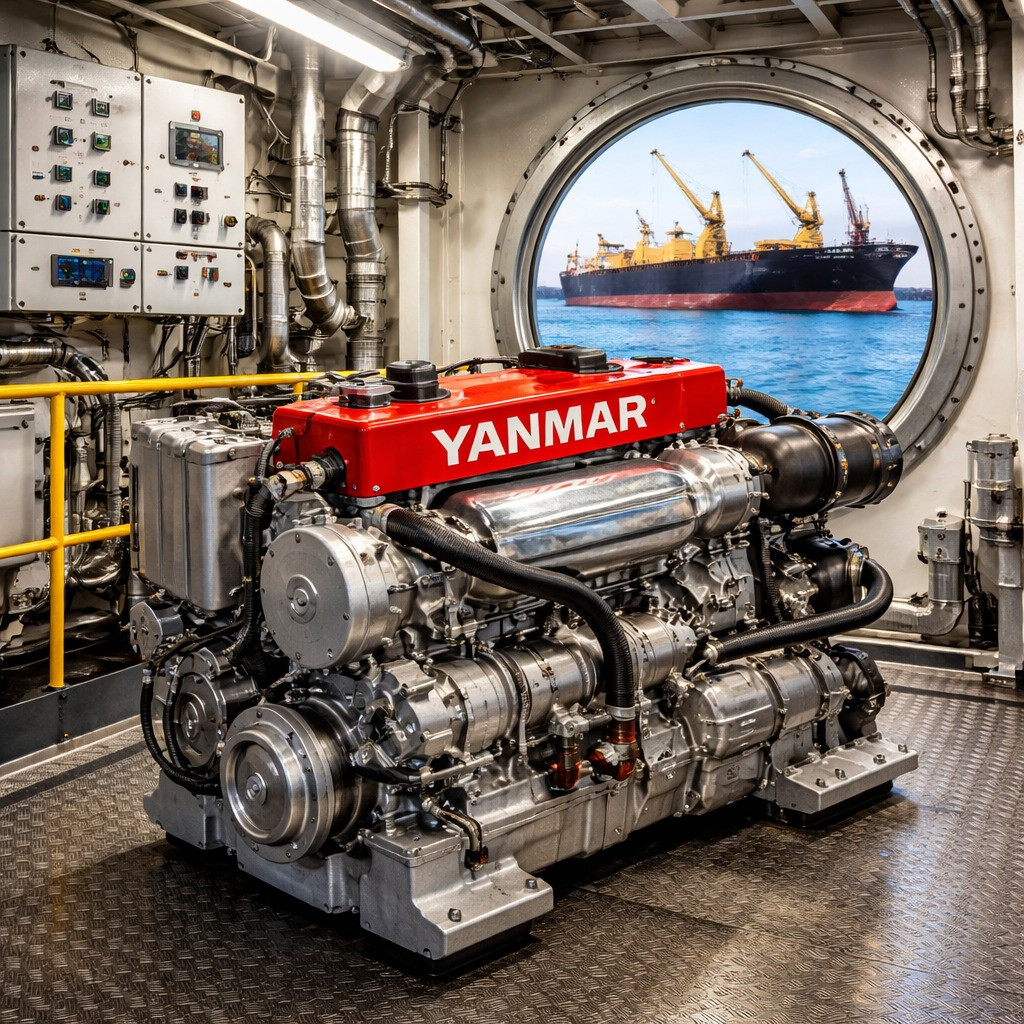
Complete Guide to the YANMAR S185 Marine Engine
In the shipping industry, reliability is not just important—it is necessary. Ships travel for long periods in the sea, often far from land. When something goes wrong, there is no quick help available. Because of this, ship owners and engineers prefer engines that are simple, strong, and dependable.
Before we get into the details, let's first explore the key components and parts of the Yanmar S185 marine engine
| ITEM | PART NO. |
| MAIN METAL CENTER | 146613-02600 |
| VALVE SEAT SUC | 146613-11081 |
| CYLINDER LINER | N/A |
Understanding these components helps in maintaining the engine and ensuring optimal performance
The YANMAR S185 marine engine is one such engine. It has been used for many years and is still trusted today. It may not have modern technology, but it does its job properly, and that is what matters the most in real working conditions.
Understanding the Role of the Engine
On a ship, not every engine is used for movement. The S185 is an auxiliary engine, which means it supports all the other systems onboard. It works in the background but plays a very important role in daily operations.
It helps the ship run smoothly by handling tasks like:
Generating electricity for the vessel
Running pumps that move fuel, oil, and water
Supporting navigation and control systems
Providing power for lights and crew facilities
Without an auxiliary engine, the ship cannot function properly, even if the main engine is working fine.
Why This Engine Is Still Trusted
Many modern engines are available today, but the S185 still has a strong place in the market. The main reason is trust. Engineers know how this engine works, how to repair it, and what to expect from it.
It is known for:
Stable performance over long hours
Low chances of sudden failure
Easy handling and operation
Long service life
This kind of reliability is very important in the marine field.
Basic Features Explained in Simple Terms
The S185 is a 6-cylinder diesel engine that works on a 4-stroke system. It runs at a speed of around 900 to 1200 RPM. It uses water cooling and has a turbocharger to improve performance.
In simple terms, these features mean:
The engine can run continuously without overheating
It can handle heavy load easily
It gives steady and smooth power output
These basic features are designed for real-world use, not just for technical performance.
Strong Build and Practical Design
One of the biggest strengths of the S185 is its design. It is built with a heavy structure and strong internal parts that can handle pressure and long usage.
At the same time, the design is simple. Engineers can easily open the engine, check parts, and carry out repairs. This is very useful when the ship is at sea and time is limited.
Some important design advantages include:
Durable body that lasts for years
Simple layout that is easy to understand
Easy access to major parts
Less dependence on complex systems
This balance of strength and simplicity makes the engine practical.
How the Engine Works
The working of the S185 is based on a simple diesel cycle. Air enters the cylinder and gets compressed. Then fuel is injected into this compressed air, which causes combustion. This combustion creates power that moves the piston.
This process repeats continuously, producing steady power.
Because the system is simple, there are fewer chances of major failure. This is one of the reasons why the engine is so dependable.
Availability in Alang
Alang is one of the largest ship recycling yards in the world. Ships that have completed their life are brought here, and their parts are removed and sold.
The S185 engine is commonly available in this market because it remains in working condition even after long use.
People prefer buying from Alang because:
Engines are available at lower prices
Many units are still usable
Buyers can inspect before purchase
Spare parts are easily available in the same market
This makes Alang an important place for sourcing marine engines.
Price Range and Buying Factors
The price of the S185 engine depends on its condition. A used engine may cost between ₹8 lakh to ₹25 lakh, while a reconditioned engine can go up to ₹40 lakh.
However, price is not the only factor to consider. Buyers should also look at:
Engine condition and maintenance history
Testing and inspection reports
Availability of spare parts
Additional equipment included
A slightly higher investment in a good engine can save money in the long term.
Importance of the Engine Manual
The engine manual is a very useful tool for engineers. It provides all the necessary details about the engine.
It includes:
Detailed drawings and diagrams
Maintenance schedules
Fuel and system settings
Troubleshooting methods
In emergency situations, the manual helps engineers take quick and correct action.
Different Variants of the S185
There are different models of the S185, such as S185L-ST, S185L-UT, S185AL, and S185 DL ET. Each model is designed for specific applications.
Some models offer higher power, while others are made for different cooling systems or operational needs. Most variants can produce around 500 to 600 HP, making them suitable for a wide range of uses.
Spare Parts and Their Importance
The availability of spare parts is one of the biggest advantages of this engine. Parts like cylinder liners, pistons, fuel pumps, turbochargers, bearings, and gaskets are easy to find.
This helps in:
Quick repairs
Reduced downtime
Better engine performance
Longer service life
Working with a reliable supplier ensures that the parts are of good quality.
Focus on Cylinder Head
The cylinder head is a key part of the engine. It controls airflow, supports injectors, and handles pressure during combustion.
Over time, it may face problems like:
Cracks due to overheating
Carbon deposits
Wear in valve areas
Regular inspection helps in avoiding major damage and keeps the engine running smoothly.
Fuel, Cooling, and Lubrication Systems
The engine depends on three main systems to function properly.
The fuel system ensures proper combustion by supplying the right amount of fuel. The cooling system controls temperature and prevents overheating. The lubrication system reduces friction and protects moving parts.
If these systems are maintained properly, the engine performs efficiently for a long time.
Common Problems and Their Solutions
Like any machine, the S185 can face issues after long use. Some common problems include overheating, fuel system faults, worn parts, and turbocharger issues.
These problems can be managed by:
Regular inspection and maintenance
Using quality spare parts
Following the manual guidelines
Fixing small issues early
Proper care reduces the risk of major breakdowns.
Installation and Operation
Correct installation is very important for the engine’s performance. If the engine is not installed properly, it may not work efficiently.
During operation, simple practices help:
Avoid overloading
Monitor temperature and pressure
Follow service schedules
Keep systems clean
These steps improve performance and increase engine life.
Applications of the S185
The S185 engine is used in different types of vessels and systems.
It is commonly used in:
Cargo ships
Bulk carriers
Fishing vessels
Offshore vessels
Marine generator systems
Its flexibility makes it suitable for many applications.
Why It Is Still in Demand
Even with newer engines available, the S185 continues to be popular. The reason is simple—it works reliably.
People prefer it because:
It has a proven track record
It is easy to repair
Spare parts are available
It is cost-effective
In the marine industry, reliability is more important than modern features.
Long-Term Value of the Engine
The S185 is not just a short-term solution. With proper maintenance, it can run for 20 to 30 years.
This long life makes it a good investment. Even after years of use, it can still perform well if it is properly maintained and serviced.
Final Thoughts
The YANMAR S185 marine engine is a strong and dependable engine that has proved its value over time. It is simple, practical, and built for real working conditions.
For ship owners and engineers, it offers something very important—peace of mind. It may not be modern, but it delivers steady performance when it is needed the most.
In the end, that is what truly matters in the marine industry.
Frequently Asked Questions (FAQs)
1. What is the YANMAR S185 marine engine used for?
The YANMAR S185 is mainly used as an auxiliary engine on ships. It helps in generating electricity, running pumps, and supporting onboard systems like lighting and navigation.
2. What is the power output of the YANMAR S185 engine?
The engine typically produces around 500 to 600 HP, depending on the model and condition.
3. What is the average price of a YANMAR S185 engine?
The price depends on condition:
Used engine: ₹8 lakh to ₹25 lakh
Reconditioned engine: up to ₹40 lakh
Prices may vary based on availability and included parts.
4. Is the YANMAR S185 engine still in demand?
Yes, it is still widely used because of its reliability, simple design, and easy maintenance, even though newer engines are available.
5. Where can I buy a YANMAR S185 engine?
You can find this engine in ship recycling markets like Alang, as well as from marine equipment suppliers and exporters.
6. Are spare parts easily available for this engine?
Yes, spare parts such as pistons, cylinder liners, fuel pumps, and turbochargers are easily available in the market, especially from trusted suppliers.
7. How long can the YANMAR S185 engine last?
With proper maintenance, the engine can run for 20 to 30 years or even longer.
8. What are the common problems in the YANMAR S185 engine?
Some common issues include:
Overheating
Fuel system problems
Wear and tear of parts
Turbocharger faults
Regular maintenance can prevent most of these issues.
9. Is the YANMAR S185 easy to repair?
Yes, the engine has a simple mechanical design, which makes it easy for engineers to inspect, repair, and maintain.
10. Does the engine require special training to operate?
No, basic marine engineering knowledge is enough. Most engineers are already familiar with this type of engine.