Difference Between Main Engine and Auxiliary Engine in Ships
Ships are one of the most important ways to transport goods around the world. Every day, thousands of ships travel across oceans carrying cargo such as oil, food, cars, machines, and containers. These ships travel long distances and sometimes stay at sea for many days or even weeks.
For a ship to work properly, it needs strong and reliable machinery. One of the most important parts of any vessel is the ship engine. Without engines, a ship cannot move and many systems on the ship will stop working.
On most vessels, there are two main types of engines:
Ship main engine
Auxiliary engine
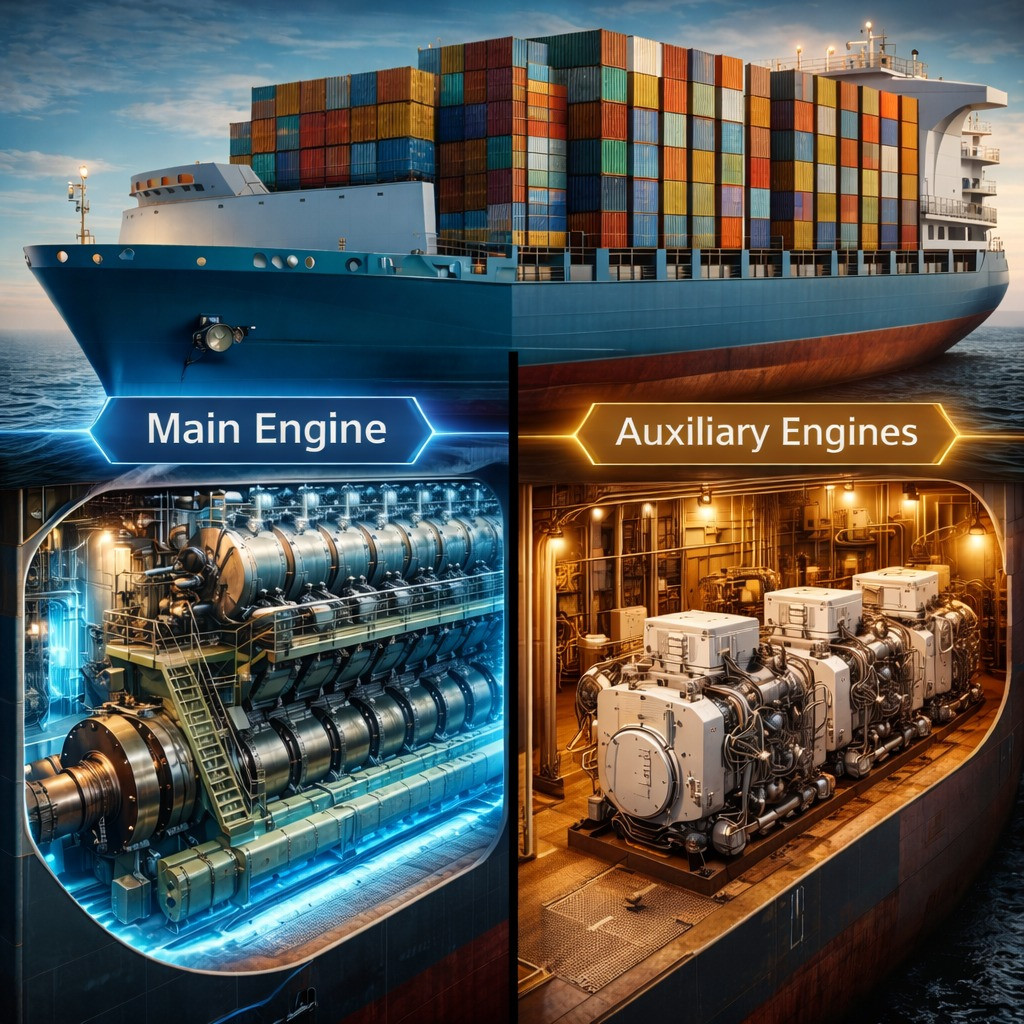
Both engines are very important, but they do different jobs. The main engine helps the ship move through the water, while the auxiliary engine produces electricity for different systems on the ship.
Understanding the difference between main and auxiliary engine is an important part of marine engineering basics. In this article, we will explain the main engine vs auxiliary engine in simple words and understand their role in the ship propulsion system, marine power generation, and the overall engine system in ship operations.
What is a Marine Engine?
A marine engine is an engine designed specifically for ships and marine vessels. These engines are built to work in tough conditions. Ships often operate for long hours and carry heavy loads, so their engines must be strong, durable, and reliable.
Most ships today use marine diesel engines. Diesel engines are widely used in the shipping industry because they are fuel-efficient, powerful, and able to operate continuously for long periods.
There are different marine engine types used on ships, but they are usually divided into two main categories:
Both engines are essential parts of the ship machinery system and together they help the vessel operate safely and efficiently.
What is a Ship Main Engine?
The ship main engine is the engine that moves the ship. It is also known as the marine propulsion engine because it provides the power needed to push the vessel through water.
The main engine produces mechanical energy from fuel. This energy is transferred through a shaft system to the propeller located at the back of the ship.
When the propeller rotates, it pushes water backward. This force moves the ship forward. This entire process is known as the ship propulsion system.
Without the main engine, a ship cannot travel from one port to another.
The main engine is usually the largest and most powerful machine on board. In many cargo ships, the main engine can be several meters tall and weigh hundreds of tons.
Role of the Marine Propulsion Engine
The marine propulsion engine plays a very important role in ship operations. Its main function is to provide propulsion power for the vessel.
Some of the main roles of the propulsion engine include:
Moving the ship forward
Maintaining the vessel’s speed
Allowing the ship to travel long distances
Supporting maneuvering operations
Large commercial ships carry thousands of tons of cargo. Because of this, they require extremely powerful engines.
For example, large container ships or oil tankers may have main engines that produce tens of thousands of kilowatts of power.
This shows how important the propulsion engine is in the ship’s marine energy system.
Types of Marine Engines Used as Main Engines
There are several marine engine types used as main engines depending on the ship’s design and purpose.
Low-Speed Diesel Engines
Low-speed engines are commonly used in large commercial ships.
These engines run at a low rotational speed but produce very high power. They are very efficient and can operate for long periods without stopping.
Low-speed engines are widely used in:
Container ships
Bulk carriers
Oil tankers
These engines are one of the most common types of marine diesel engine used in the shipping industry.
Medium-Speed Diesel Engines
Medium-speed engines run at higher speeds compared to low-speed engines.
They are usually connected to the propeller through a gearbox.
These engines are often used in:
Ferries
Passenger ships
Offshore vessels
Medium-speed engines are smaller than low-speed engines but still provide strong performance.
Gas Turbine Engines
Some naval ships and high-speed vessels use gas turbine engines.
Gas turbines can produce high power and allow ships to move very fast. However, they consume more fuel compared to diesel engines.
Because of this, diesel engines are still the most common choice for commercial shipping.
What is an Auxiliary Engine?
While the main engine moves the ship, the auxiliary engine supports the ship’s internal systems.
An auxiliary engine does not move the ship. Instead, it is mainly used to run generators that produce electricity.
These engines are an important part of the marine auxiliary machinery and the ship power system.
Ships need electricity for many operations such as lighting, navigation equipment, communication systems, pumps, and cargo equipment.
Without auxiliary engines, most of the ship’s systems would stop working.
Marine Generator Engine
Auxiliary engines are commonly called marine generator engines because they run electrical generators.
The process is simple:
The auxiliary engine runs using fuel.
The engine rotates the generator.
The generator converts mechanical energy into electricity.
This electricity powers the ship electrical power system and supports marine power generation on board the vessel.
Most ships have multiple auxiliary engines so that electricity is always available. If one generator stops working, another can continue supplying power.
Ship Electrical Power System
The electricity produced by auxiliary engines is distributed across the ship through the ship electrical power system.
This system includes several important components such as:
Main switchboard
Electrical cables
Distribution panels
Circuit breakers
Control systems
The ship power system ensures that electrical energy reaches all the necessary equipment safely.
Equipment Powered by Auxiliary Engines
Many systems on a ship depend on electricity produced by auxiliary engines.
Navigation Systems
Ships rely on modern navigation equipment to travel safely across oceans.
Examples include:
These systems require constant electrical power.
Communication Systems
Ships need reliable communication systems to stay connected with ports, shipping companies, and other vessels.
Communication equipment includes marine radios and satellite communication systems.
Cargo Handling Equipment
Cargo ships use cranes, pumps, and other machinery to load and unload goods. These machines operate using electricity generated by auxiliary engines.
Crew Accommodation
Electricity is also required for the daily needs of the crew.
This includes:
Lighting
Air conditioning
Kitchen equipment
Water systems
All of these systems depend on reliable marine power generation.
Main Engine vs Auxiliary Engine
When we compare main engine vs auxiliary engine, the difference becomes clear.
Purpose
The ship main engine provides propulsion and moves the vessel through water.
The auxiliary engine generates electricity and powers ship equipment.
Power Output
The marine propulsion engine produces much more power because it must move the entire ship.
Auxiliary engines produce smaller amounts of power mainly for electricity generation.
Size
The ship main engine is much larger than auxiliary engines and occupies a large space in the engine room.
Auxiliary engines are smaller and several units are installed on the ship.
Operation
The main engine usually operates when the ship is sailing.
Auxiliary engines run almost all the time because ships always need electricity.
Even when the ship is docked at port, auxiliary engines may continue running.
Marine Power Plant
All the power-producing systems on a ship together form the marine power plant.
The marine power plant includes:
Main propulsion engine
Auxiliary engines
Generators
Boilers
Pumps
Fuel systems
Cooling systems
The marine power plant provides both propulsion power and electrical power needed for ship operations.
Ship Propulsion System
The ship propulsion system is the system that moves the vessel through water.
It includes several components such as:
Marine propulsion engine
Propeller shaft
Bearings
Propeller
Gearbox (in some ships)
When the engine rotates the shaft, the propeller spins and pushes water backward. This force moves the ship forward.
Efficient propulsion systems help ships reduce fuel consumption and improve performance.
Marine Auxiliary Machinery
Ships contain many types of marine auxiliary machinery that support engine operations.
Some examples include:
Pumps
Ships use pumps for many purposes such as fuel transfer, cooling water circulation, bilge pumping, and ballast operations.
Air Compressors
Air compressors produce compressed air that is used to start large marine engines.
Oil Purifiers
Oil purifiers clean fuel and lubricating oil to protect engine components.
Boilers
Boilers produce steam used for heating fuel and supporting other ship operations.
Engine System in Ship
The engine system in ship includes several supporting systems that help engines work properly.
These systems include:
Fuel system
Cooling system
Lubrication system
Air intake system
Exhaust system
All these systems work together to ensure that engines operate safely and efficiently.
Importance of Engine Maintenance
Regular maintenance is very important for both main engines and auxiliary engines.
Marine engineers inspect the engines and check different parts to make sure everything is working properly.
They monitor components such as:
Pistons
Cylinder liners
Bearings
Injectors
Valves
Ships also carry spare parts so repairs can be done quickly if something fails during a voyage.
Proper maintenance helps prevent engine problems and ensures safe ship operations.
Conclusion
Ships rely on powerful and reliable machinery to travel across oceans and transport goods safely. Two of the most important engines on any vessel are the ship main engine and the auxiliary engine.
The marine propulsion engine moves the ship and forms the core of the ship propulsion system.
The auxiliary engine produces electricity through marine generator engines and powers the ship electrical power system.
Together, these engines form the marine power plant and support the ship’s marine energy system.
Understanding the difference between main and auxiliary engine helps marine engineers, ship operators, and maritime businesses maintain efficient and safe ship operations around the world.